Connect with Nature
Canada’s wilderness
doesn’t wait.
Go find it.
Ten national parks in the Rocky Mountains alone. Coastlines on three oceans. Boreal forest that runs for a thousand kilometres without interruption. Canada’s natural scale is almost difficult to believe until you are standing inside it.
On foot
Hiking
Canada’s trail network covers terrain that ranges from sea-level coastal rainforest to alpine passes above the treeline. The best hikes here do not simply reward you with views. They change your sense of scale. Plan for variable weather regardless of the season, and book backcountry permits well ahead of your intended dates.
Alberta · Banff National Park
Plain of Six Glaciers, Lake Louise
Banff National Park
The trail begins at the edge of Lake Louise, already one of the most photographed lakes in the world, and climbs steadily toward the Victoria Glacier and a teahouse that has been serving hikers since 1927. The return route is 14 kilometres, the elevation manageable, and the scenery so relentless it becomes genuinely difficult to keep moving forward. It is arguably the finest half-day hike in Canada.
British Columbia · Pacific Rim National Park
West Coast Trail
Pacific Rim National Park Reserve
Seventy-five kilometres along the southwestern edge of Vancouver Island, the West Coast Trail is one of the world’s great multi-day hikes. Cable cars, ladders, tidal pools, and old-growth forest all feature across the six to eight day route. It requires a permit, good fitness, and genuine preparation. In return, it offers something you will not find anywhere else.
Newfoundland · Gros Morne National Park
Gros Morne Tablelands
Gros Morne National Park
The Tablelands are among the most geologically significant landscapes on earth, a place where the ocean floor was thrust onto the continent and left exposed for anyone to walk across. The rust-coloured plateau is barren, otherworldly, and strangely moving. Combine it with the Western Brook Pond fjord boat tour and you have two of Canada’s most unusual natural experiences in one park.
Ontario · Bruce Peninsula National Park
The Bruce Trail
Niagara Escarpment to Tobermory
The Bruce Trail runs 900 kilometres along the Niagara Escarpment from Niagara to Tobermory, the longest footpath in Canada. Day hikes at the Bruce Peninsula National Park end lead to the Grotto, one of the most photographed spots in Ontario, and the clear Georgian Bay waters below the cliff edges. The full trail is a thru-hiking ambition; individual sections are accessible and rewarding for any fitness level.
Canada Strong Pass · June 19 to September 7, 2026
National park entry is free this summer.
Every Parks Canada national park, national historic site, and marine conservation area is free to enter between June 19 and September 7, 2026. No registration, no pass to carry. Banff, Jasper, Pacific Rim, Gros Morne and hundreds more are included. Camping discounts apply too. The parks will be busy, so plan ahead.
In the wild
Wildlife
Canada has polar bears, beluga whales, grizzly bears, moose, orcas, wood bison, and grey wolves, most of them accessible without any specialist expedition required. Wildlife viewing here is not a zoo experience. It happens in places where the animals belong, which makes encounters feel genuinely earned.
Manitoba · Hudson Bay
Churchill: Polar Bears and Beluga Whales
Churchill, Manitoba
Churchill is one of a handful of places on earth where you can observe polar bears in the wild, and the only place accessible by rail and road. In autumn the bears gather on the shore of Hudson Bay waiting for the ice to form. In summer, thousands of beluga whales fill the Churchill River estuary. Two entirely different reasons to visit the same extraordinary town.
British Columbia · Vancouver Island
Tofino: Whales, Bears and Sea Lions
Tofino, Vancouver Island
Pacific grey whales pass through Tofino’s waters on their annual migration, close enough that small boats can accompany them without disturbance. Black bears forage on the beaches at low tide. Stellar sea lions haul out on offshore rocks. Tofino manages to be a genuinely sophisticated coastal town and one of Canada’s great wildlife destinations at the same time.
Alberta · Jasper National Park
Jasper: Elk, Wolves and Dark Skies
Jasper National Park
Jasper has a legitimate claim to the best wildlife viewing of any national park in Canada. Elk wander the townsite in the evening. Wolves and grizzly bears are regularly spotted along the Icefields Parkway in early morning. At night, Jasper is also a designated Dark Sky Preserve, one of the largest in the world. It is the kind of park where you plan for two nights and stay for five.
British Columbia · Northern Coast
Great Bear Rainforest: Spirit Bears
Central and North Coast, BC
The Great Bear Rainforest is the largest intact temperate rainforest on earth, and it is home to the Spirit Bear, a rare white variant of the black bear found nowhere else in the world. Accessible only by small ship or floatplane, encounters with Spirit Bears require patience and proper guidance. Those who make the effort consistently describe it as one of the most affecting wildlife experiences of their lives.
Behind the wheel
Scenic Drives
Some landscapes are too large to encounter on foot. Canada has a handful of drives where the road itself becomes the experience, not simply the means of getting somewhere else. These are routes worth slowing down for, where the rule is to stop whenever something compels you to stop.
Alberta · Banff to Jasper
Icefields Parkway
Highway 93, Alberta
Two hundred and thirty kilometres between Banff and Jasper, entirely through the Rocky Mountains, with eleven major glaciers visible from the road. The Athabasca Glacier at the Columbia Icefield is accessible on foot. Wildlife crossings mean you slow for elk and bears rather than traffic. The Icefields Parkway is routinely listed among the world’s great drives, and the description is not an overstatement. Allow a full day in each direction.
Nova Scotia · Cape Breton Island
The Cabot Trail
Cape Breton Highlands
The Cabot Trail loops around the northern tip of Cape Breton Island, climbing into the highlands and dropping to the sea in a series of views that have no equivalent on the east coast. Drive it anticlockwise to keep the ocean on your right on the most dramatic section. Allow at least two days. In October, the foliage along the highland section is almost extravagant.
British Columbia · Vancouver to Whistler
Sea to Sky Highway
Highway 99, British Columbia
The drive from Vancouver to Whistler on Highway 99 earns its name within the first twenty minutes. Howe Sound opens on your left, sheer granite walls rise to the right, and the road climbs steadily into the mountains. Shannon Falls, Stawamus Chief, and Brandywine Falls are all worth stopping for. It is a two-hour drive that rarely feels like one.
Ontario · Lake Superior North Shore
Trans-Canada: Sault Ste. Marie to Thunder Bay
Highway 17, Northern Ontario
The most dramatic stretch of the Trans-Canada runs along the north shore of Lake Superior between Sault Ste. Marie and Thunder Bay. The Canadian Shield meets the largest freshwater lake in the world in a series of headlands, river mouths, and lookouts that inspired the Group of Seven. It is long, remote, and entirely worth it, especially in September when the colours begin to turn.
On the water
Paddling & Water
Canada holds a fifth of the world’s fresh water, and a good part of it is accessible by canoe, kayak, or open boat. Paddling here has a particular quality: silence, distance from roads, and the sense that you are moving through a landscape at the right speed. Many of the best routes have barely changed since they were travelled by Indigenous peoples and early explorers centuries ago.
Ontario · Algonquin Provincial Park
Algonquin Canoe Routes
Algonquin Provincial Park
Algonquin Provincial Park has over 1,500 kilometres of canoe routes threading through a network of lakes and portages that can sustain trips from one night to three weeks. Loons call across the water at dusk. Moose wade into the shallows at dawn. For many Ontarians, a first canoe trip in Algonquin is a formative experience. It holds up on the twentieth visit just as well as the first.
British Columbia · Pacific Rim National Park
Broken Group Islands
Barkley Sound, Vancouver Island
Around a hundred islands and islets scattered across Barkley Sound on the west coast of Vancouver Island, the Broken Group is one of North America’s premier sea kayaking destinations. Orcas, grey whales, seals, and sea otters share the water. The camping is primitive and magnificent. Access is by float plane or water taxi from Ucluelet, which is part of the point.
Ontario · Killarney Provincial Park
Killarney: White Lakes and Clear Water
Georgian Bay, Ontario
Killarney’s quartzite ridges give its lakes a clarity and colour that stops first-time visitors in their tracks. The canoe routes here are more technical than Algonquin, with more exposed crossings and longer portages, which also means fewer people. The La Cloche Silhouette Trail can be combined with a canoe trip for one of the most complete wilderness experiences in Ontario.
Manitoba · Churchill River
Boundary Waters and Northern Rivers
Manitoba and Saskatchewan
The Churchill River system and the Boundary Waters canoe routes along the Ontario-Minnesota border offer multi-week expeditions through landscapes that feel genuinely remote. These are routes for experienced paddlers with wilderness navigation skills. The reward is days without seeing another party, skies without light pollution, and a sense of the country at a scale that is difficult to encounter any other way.
In the cold
Winter
Canadian winters are genuine, and they are best met head on. The country has world-class skiing, dog sledding through boreal forest, and the entirely unique experience of watching the Northern Lights from somewhere with no light pollution within a hundred kilometres. The right gear matters. The right attitude matters more.
British Columbia · Coast Mountains
Whistler Blackcomb
Whistler, British Columbia
The largest ski resort in North America by skiable terrain, Whistler Blackcomb has two mountains, over 200 marked runs, and a vertical drop that exceeds 1,500 metres. The village at the base functions as a genuine mountain town rather than a purpose-built resort. The PEAK 2 PEAK gondola connecting the two summits is worth the ride in any condition, ski season or not.
Yukon · Whitehorse and surrounds
Northern Lights and Dog Sledding
Whitehorse, Yukon
Whitehorse sits directly under the auroral oval and is one of the most reliable places in the world to see the Northern Lights. The season runs from late August through April, with February and March offering the longest dark hours. Combine it with a dog sled excursion through the boreal forest and you have two of Canada’s most genuinely wild winter experiences within reach of a single trip.
Alberta · Banff National Park
Banff in Winter
Banff National Park
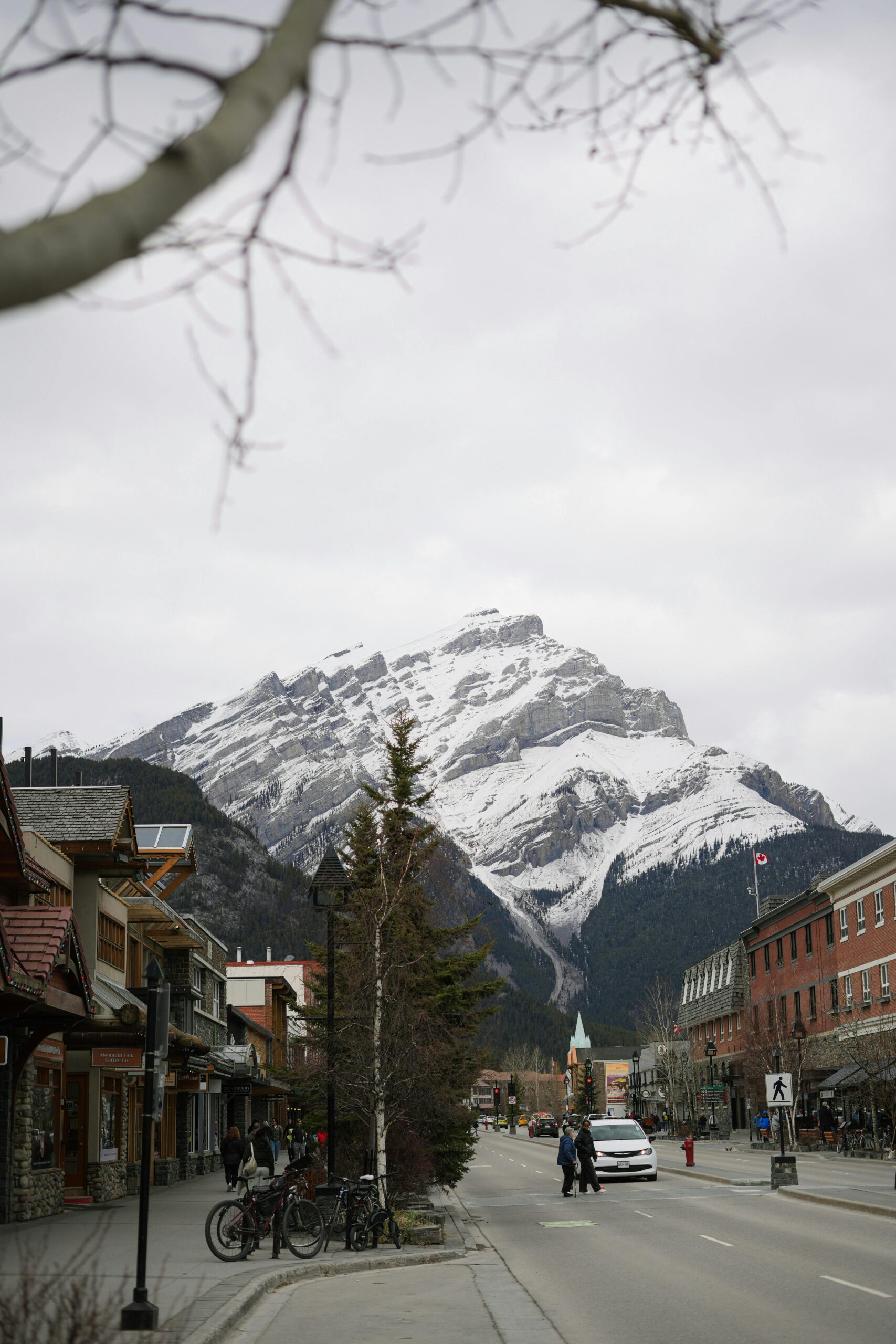
Banff in winter is a different place to Banff in summer. The crowds thin, the light goes golden and flat, and the Rockies under snow take on a stillness that is almost meditative. Lake Louise freezes solid and becomes a skating rink. Banff Sunshine and Lake Louise ski areas are world-class. And the town itself, quieter and more itself in the cold season, rewards the traveller who chose it deliberately.
Ontario · Algonquin Provincial Park
Winter Camping and Snowshoeing
Algonquin, Killarney and beyond
Ontario’s provincial parks take on a completely different character in winter. The canoe routes become snowshoe trails. The campgrounds empty out to a handful of parties who understand something the summer crowds do not. Wildlife is more visible against the snow, and the silence of a frozen lake on a clear night in January is one of the more affecting experiences this country has to offer.